
Why Cloud Cost Optimization is Crucial for Startups & SMEs
For startups and Small and Medium-sized Enterprises (SMEs), every rupee and dollar counts. While the cloud offers unparalleled agility, scalability, and innovation, unchecked cloud spending can quickly erode budgets and stifle growth. What begins as a flexible operational expense can morph into a significant financial burden if not managed proactively.
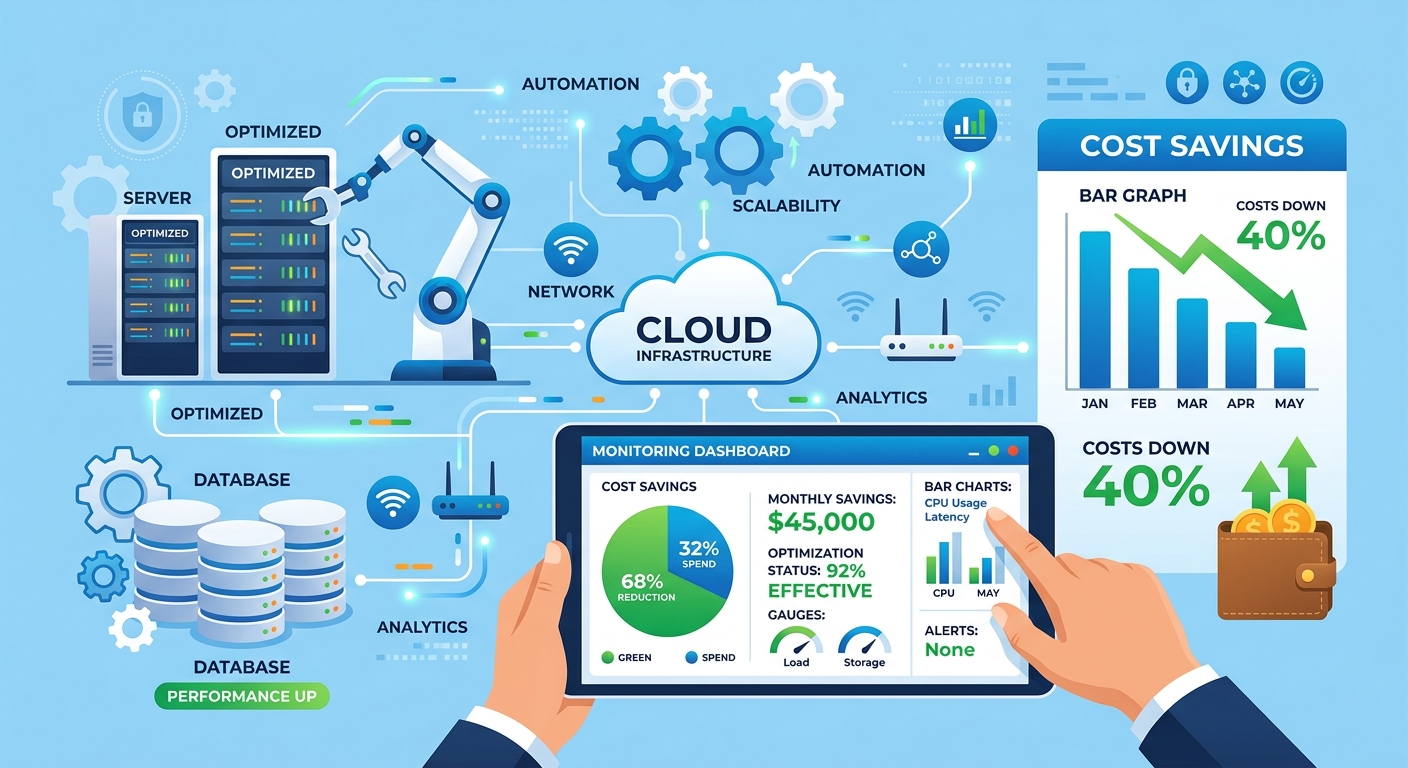
Many resource-constrained businesses fall into common cloud cost pitfalls:
- Over-provisioning: Allocating more compute, storage, or database resources than actually needed, often based on peak assumptions rather than real-time usage.
- Idle Resources: Forgetting to de-provision resources after testing, development, or project completion, leading to ‘zombie’ costs.
- Lack of Visibility: Without proper tagging and monitoring, it’s hard to identify who or what is spending what, making accountability difficult.
- Inefficient Architectures: Not designing applications with cost-efficiency in mind from the outset, leading to expensive data transfers, unnecessary database queries, or suboptimal storage choices.
- Missed Discounts: Failing to leverage commitment-based discounts like Reserved Instances or Savings Plans.
Effective Cloud Cost Optimization isn’t just about cutting expenses; it’s about maximizing value, ensuring your cloud infrastructure supports your business objectives efficiently, and maintaining the agility that drew you to the cloud in the first place.
7 Essential Strategies for Effective Cloud Cost Optimization
Here are seven actionable strategies to help startups and SMEs take control of their cloud spending, balancing cost savings with performance and agility:
1. Rightsizing Instances and Services
One of the most immediate and impactful ways to reduce cloud costs is to ensure your resources are appropriately sized for their actual workloads. Over-provisioning is a common culprit for inflated bills.
- Actionable Steps:
- Monitor Usage: Utilize cloud provider tools like AWS CloudWatch or GCP Monitoring to track CPU, memory, network, and disk I/O utilization over time.
- Identify Underutilized Resources: Look for instances or databases consistently running at low utilization (e.g., <20% CPU for extended periods).
- Leverage Recommendations: AWS Compute Optimizer and GCP’s recommendations provide insights into potential rightsizing opportunities based on your usage patterns.
- Adjust Accordingly: Downsize instances, reduce database capacities, or switch to more cost-effective service tiers.
- Common Pitfalls:
- Rightsizing based on insufficient data, leading to performance bottlenecks during peak times.
- Not considering burstable instances (like AWS T-series or GCP E2-series) for workloads with fluctuating demands.
2. Leveraging Reserved Instances (RIs) and Savings Plans
Cloud providers offer significant discounts for committing to a certain level of usage over a 1-year or 3-year term. These are ideal for stable, predictable workloads.
- Actionable Steps:
- Analyze Baseline Usage: Determine your minimum, consistent usage for compute (EC2, Fargate, Lambda) and database services (RDS, DynamoDB).
- Choose the Right Commitment:
- Reserved Instances (RIs): Best for specific instance types or regional commitments.
- Savings Plans: Offer more flexibility, applying discounts across various compute services based on an hourly spend commitment.
- Start Small: For startups, consider 1-year commitments initially to maintain flexibility.
- Common Pitfalls:
- Over-committing to resources that may be deprecated or no longer needed, leading to wasted spend.
- Not accounting for business growth or architectural changes that might render commitments obsolete.
3. Implementing Auto-Scaling and Serverless Architectures
Dynamic resource allocation ensures you only pay for what you use, when you use it. This is a cornerstone of cloud efficiency.
- Actionable Steps:
- Configure Auto-Scaling Groups: For fluctuating workloads, set up auto-scaling policies to automatically add or remove instances based on demand metrics (e.g., CPU utilization, request queue length).
- Explore Serverless: For event-driven tasks, APIs, or batch processing, consider serverless options like AWS Lambda, GCP Cloud Functions, or Cloud Run. You pay only for execution time, not idle compute.
- Design for Elasticity: Build applications that can scale horizontally and gracefully handle resource fluctuations.
- Common Pitfalls:
- Incorrectly configured auto-scaling policies leading to either over-provisioning or performance degradation.
- Ignoring cold start latencies in serverless functions for latency-sensitive applications.
4. Optimizing Storage Costs
Storage can be a silent budget drain, especially as data volumes grow. Intelligent storage management is key.
- Actionable Steps:
- Categorize Data: Identify data access patterns (frequently accessed ‘hot’ data vs. rarely accessed ‘cold’ archival data).
- Utilize Storage Classes: Move older, less frequently accessed data to cheaper storage classes (e.g., AWS S3 Infrequent Access, Glacier; GCP Coldline, Archive).
- Implement Lifecycle Policies: Automate the transition of data between storage classes or its deletion after a defined period.
- Delete Unnecessary Data: Regularly review and remove old backups, logs, or temporary files that are no longer needed.
- Common Pitfalls:
- Storing all data in expensive ‘standard’ storage, regardless of access frequency.
- Not having a clear data retention policy.
5. Monitoring and Alerting for Cost Anomalies
Visibility is the first step towards control. Proactive monitoring helps catch unexpected cost spikes before they become major problems.
- Actionable Steps:
- Set Up Billing Alerts: Configure alerts in AWS Budgets or GCP Billing to notify you when spending approaches predefined thresholds.
- Implement Resource Tagging: Tag all resources with relevant metadata (e.g., project, owner, environment). This allows for granular cost allocation and reporting.
- Regularly Review Cost Reports: Use AWS Cost Explorer or GCP Billing Reports to analyze spending trends, identify cost drivers, and attribute costs to specific teams or projects.
- Automate Cost Governance with n8n: Leverage workflow automation tools like n8n to proactively manage costs. For instance, an n8n workflow can:
- Trigger an alert in Slack or email if a specific resource’s cost exceeds a daily limit.
- Automatically shut down development or staging instances outside business hours based on tags.
- Generate daily or weekly cost reports from billing data and distribute them to relevant stakeholders.
- Initiate a review process for resources that have been idle for an extended period.
- Common Pitfalls:
- Lack of granular visibility due to inconsistent or absent tagging.
- Being reactive to cost overruns rather than proactive.
6. Deleting Unused Resources and Snapshots
Orphaned resources are a significant source of waste. A regular cleanup routine is essential.
- Actionable Steps:
- Audit Regularly: Schedule periodic reviews to identify unattached EBS volumes, old snapshots, idle load balancers, unused IP addresses, or forgotten databases.
- Automate Cleanup: For development/testing environments, consider automated scripts or n8n workflows to shut down or terminate resources after a specified idle period or at the end of a workday.
- Review Old Backups: Ensure backup retention policies are appropriate and delete excessively old snapshots or AMIs.
- Common Pitfalls:
- Forgetting to de-provision resources after a project or experiment concludes.
- Retaining multiple, redundant backups unnecessarily.
7. Implementing FinOps Principles and Culture
FinOps is an evolving operational framework that brings financial accountability to the variable spend model of the cloud. It fosters collaboration between finance, engineering, and operations teams.
- Actionable Steps:
- Foster Collaboration: Encourage regular communication and shared responsibility for cloud costs across teams.
- Establish Ownership: Assign clear ownership for cloud resources and their associated costs.
- Educate Teams: Train engineers and developers on cost-aware architecture and operational practices.
- Regular Cost Reviews: Hold periodic meetings to review cloud spend, discuss optimization opportunities, and track progress against budget goals.
- Common Pitfalls:
- Treating cloud costs solely as an IT problem, rather than a shared business responsibility.
- Lack of a clear framework for decision-making around cloud spending.
How Applizor Softech Can Help You Achieve Sustainable Cloud Savings
At Applizor Softech LLP, we understand the unique challenges startups and SMEs face in managing their cloud infrastructure. Our expertise spans across the entire cloud lifecycle, from initial architecture to ongoing optimization and management.
- Strategic Cloud & DevOps Consulting: Our DevOps experts can help you design cost-efficient cloud architectures from the ground up, or optimize your existing setup on AWS and GCP. We focus on rightsizing, auto-scaling, and implementing best practices that align with your business goals.
- Managed Cloud Services: We offer comprehensive managed services that include continuous monitoring, proactive optimization, and routine cleanup of unused resources, ensuring your cloud environment remains lean and efficient.
- AI Automation & n8n Workflow Integration: Leveraging our proficiency in AI automation and n8n workflow automation, we can implement custom solutions for automated cost governance. This includes setting up intelligent alerts, automating resource shutdowns based on conditions, and generating actionable cost reports, as discussed in Strategy 5.
- Custom Software Development: When building custom ERP/CRM/SaaS solutions or mobile apps, we prioritize cloud-native, cost-effective designs that are inherently optimized for performance and budget.
By partnering with Applizor, you gain not just a service provider, but a strategic ally committed to helping you achieve sustainable cloud cost optimization without compromising performance or future innovation.
Conclusion
Cloud Cost Optimization is an ongoing journey, not a one-time task. For startups and SMEs, mastering this discipline is critical for financial health and competitive advantage. By systematically applying these seven strategies – rightsizing, leveraging commitments, embracing elasticity, optimizing storage, vigilant monitoring, diligent cleanup, and fostering a FinOps culture – you can significantly reduce your cloud spend.
Remember, the goal is to optimize, not just minimize. It’s about getting the most value from your cloud investment, ensuring your infrastructure is agile, performant, and perfectly aligned with your business’s evolving needs. Take control of your cloud costs today and empower your business for sustainable growth.