
Introduction: Building for Tomorrow, Today
In today’s dynamic business landscape, custom Software as a Service (SaaS) offers unparalleled flexibility, tailoring solutions precisely to your operational needs. From custom ERP/CRM systems to specialized industry applications, custom SaaS empowers businesses to gain a competitive edge. However, the true value of a custom SaaS solution lies not just in its initial functionality, but in its ability to grow and adapt alongside your business. This is where custom SaaS scalability becomes paramount.
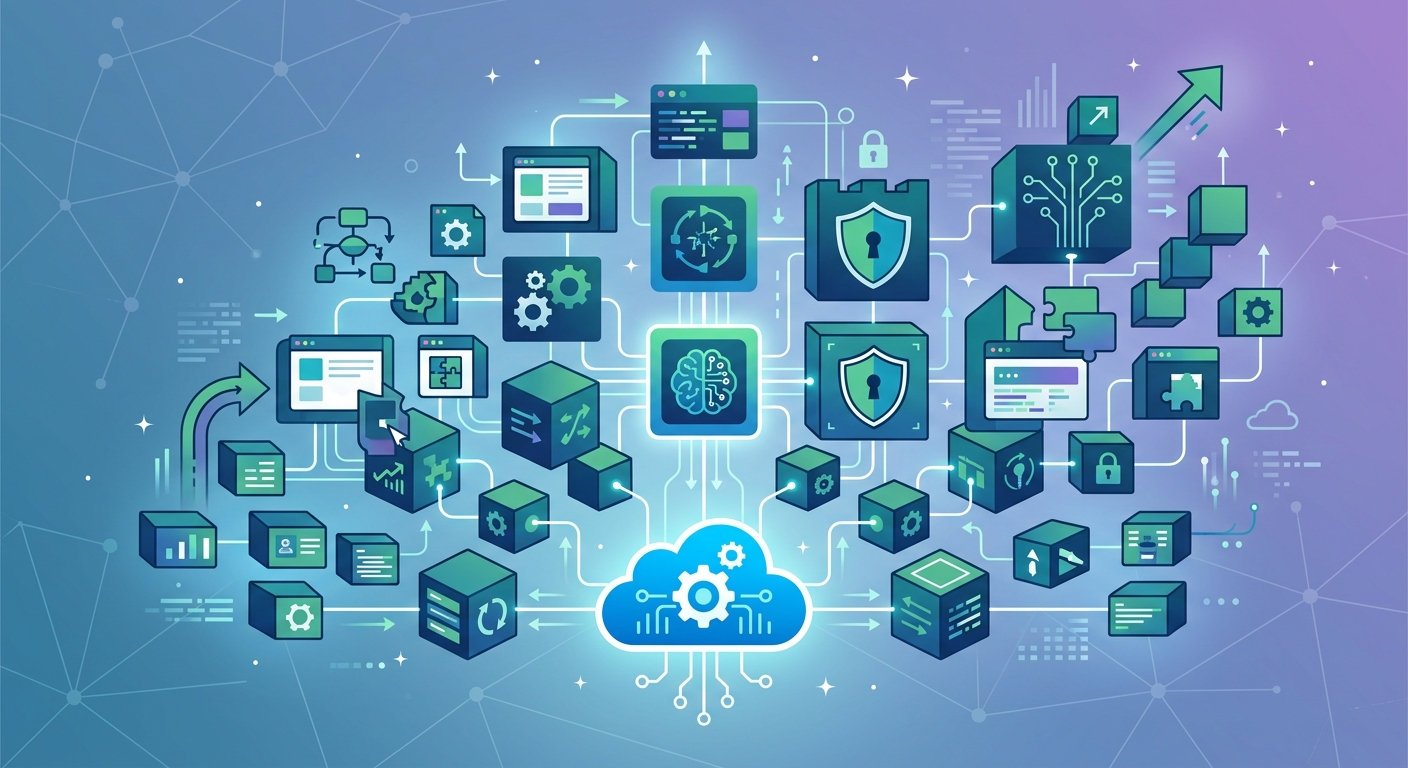
Scalability isn’t merely about handling more users or data; it’s about maintaining performance, managing costs, and enabling future innovation without rebuilding from scratch. For startup founders, SME owners, and even established IT leaders, ensuring your custom SaaS platform can scale cost-effectively and efficiently is a critical challenge. It involves more than just robust infrastructure; it demands strategic architectural choices, smart automation, and a proactive approach to security.
This article outlines seven essential best practices for achieving robust custom SaaS scalability, offering practical insights for businesses of all sizes to build platforms ready for future growth.
1. Adopt a Modular & Microservices Architecture
A monolithic application, where all components are tightly coupled, quickly becomes a bottleneck for scalability. A fundamental best practice for scalable SaaS architecture is to design your application using a modular or microservices approach.
- Independent Scaling: Each service can be scaled independently based on its specific load requirements. For example, your custom ERP’s inventory management module might experience higher transaction volumes than its HR module and can be scaled up or down without affecting the entire system.
- Faster Development & Deployment: Smaller, independent services are easier to develop, test, and deploy, accelerating your time to market for new features.
- Technology Flexibility: Different services can use different technologies best suited for their specific tasks, preventing vendor lock-in and allowing for optimal performance.
- Resilience: The failure of one microservice does not necessarily bring down the entire application, improving overall system resilience.
This architectural choice balances initial development speed with long-term adaptability, making it a cornerstone for any custom SaaS solution aiming for sustainable growth.
2. Leverage Cloud-Native Infrastructure & DevOps Automation
The cloud is the natural home for scalable SaaS. Utilizing cloud-native services and adopting strong DevOps practices are critical for efficient scaling.
- Elasticity & Auto-Scaling: Platforms like AWS and GCP offer auto-scaling capabilities that automatically adjust computing resources (servers, databases) based on demand. This ensures your application can handle traffic spikes without manual intervention and scales down during low periods to save costs – a significant advantage for startups and SMEs.
- Managed Services: Offload operational burdens like database management, queuing, and caching to cloud providers. This frees up your development team to focus on core product features.
- Containerization with Docker: Packaging your application and its dependencies into Docker containers ensures consistent environments across development, testing, and production, simplifying deployment and scaling.
- CI/CD Pipelines: Implementing Continuous Integration and Continuous Delivery (CI/CD) pipelines automates the build, test, and deployment processes. This reduces human error, speeds up releases, and ensures that your infrastructure can evolve as rapidly as your application.
Applizor specializes in AWS/GCP cloud deployments and robust CI/CD pipelines, ensuring your custom SaaS benefits from a resilient and cost-optimized infrastructure.
3. Implement Robust Data Management & Database Scalability
Your database is often the first component to buckle under heavy load. Effective data management strategies are vital for custom SaaS scalability:
- Sharding & Partitioning: Distribute your data across multiple database instances or partitions. This reduces the load on a single database and allows you to scale specific data segments independently.
- Read Replicas: Offload read-heavy operations to replica databases, allowing the primary database to focus on write operations.
- Database Optimization: Regularly optimize queries, index tables appropriately, and choose the right database technology (SQL for relational data, NoSQL for flexible, high-volume data) for different parts of your application.
- Caching: Implement caching mechanisms (e.g., Redis, Memcached) to store frequently accessed data in memory, reducing the need to hit the database for every request.
4. Design with an API-First Approach for Seamless Integration
Modern SaaS applications rarely exist in isolation. An API-first design philosophy ensures your custom SaaS can easily integrate with other internal systems, third-party services, and future applications.
- Standardized Interfaces: Develop well-documented, RESTful APIs that provide clear, consistent ways for other applications to interact with your SaaS. This is crucial for expanding your ecosystem and offering new functionalities.
- Loose Coupling: APIs promote loose coupling between services, allowing different components to evolve independently without breaking integrations.
- Future-Proofing: A strong API layer enables you to expose functionalities to partners, build mobile apps (e.g., Flutter, React Native, or native mobile apps), or integrate with new AI services, significantly extending your platform’s reach and value over time.
Applizor’s expertise in custom API development ensures your SaaS platform is built for broad connectivity and future expansion.
5. Operational Scalability through AI Automation & Workflow Orchestration
Beyond technical infrastructure, operational scalability is crucial, especially for startups and SMEs looking to maximize efficiency with limited resources. This is where AI automation and workflow orchestration truly shine.
- Automating Repetitive Tasks: AI agents can handle routine customer support queries, data entry, report generation, and other time-consuming tasks, freeing human staff for more strategic work.
- n8n Workflow Automation: Tools like n8n allow you to build complex, multi-step workflows that connect various applications and services. Imagine automating lead qualification, onboarding processes, or even complex data synchronization between your custom ERP and marketing tools. This significantly reduces manual effort and potential errors as your business grows.
- RAG Knowledge Bases & Voice Bots: Implement RAG (Retrieval Augmented Generation) knowledge bases to provide instant, accurate information to users or internal teams, scaling your support capabilities. Voice bots can handle initial customer interactions, further streamlining operations.
By automating operational workflows with AI and tools like n8n, businesses can scale their output without a proportional increase in headcount, making growth more cost-effective and sustainable. Applizor provides comprehensive AI automation software development services, including AI agents, n8n workflow automation, RAG knowledge bases, and voice bots, to help businesses achieve this operational leverage.
6. Prioritize Security as a Foundational Pillar
Scalability without robust security is a liability. Security must be an integral part of your custom SaaS architecture from day one, not an afterthought.
- Data Encryption: Implement encryption for data at rest and in transit to protect sensitive information.
- Access Control (IAM): Utilize Identity and Access Management (IAM) best practices to ensure users and services only have the minimum necessary permissions.
- Regular Security Audits & Penetration Testing: Proactively identify and address vulnerabilities through continuous monitoring and scheduled security assessments.
- Compliance: Design your architecture with relevant industry regulations (e.g., GDPR, HIPAA, local data protection laws in India) in mind to avoid costly penalties and build user trust.
A secure foundation ensures that as your custom SaaS scales, it remains trustworthy and compliant.
7. Embrace Continuous Monitoring, Performance Optimization & Iteration
Scalability is not a one-time achievement but an ongoing process. Continuous monitoring and iterative optimization are essential for long-term custom SaaS scalability.
- Observability Tools: Implement comprehensive logging, monitoring, and tracing tools to gain deep insights into your application’s performance, resource utilization, and potential bottlenecks.
- Performance Testing: Regularly conduct load testing and stress testing to simulate high traffic scenarios and identify breaking points before they impact users.
- A/B Testing & User Feedback: Continuously gather user feedback and use A/B testing to optimize features and user experience, which can also impact performance and resource usage.
- Iterative Development: Adopt an agile methodology that allows for frequent updates and improvements. This ensures you can quickly respond to performance issues, optimize resource consumption, and adapt to evolving business requirements.
By adopting a culture of continuous improvement, your custom SaaS can evolve gracefully and efficiently, maintaining optimal performance as it scales.
Conclusion: Your Partner in Scalable Custom SaaS Development
Achieving robust custom SaaS scalability requires a holistic strategy, integrating smart architectural choices, leveraging cloud-native capabilities, embracing operational automation, and prioritizing security from the outset. For startups and SMEs, balancing initial development speed and cost with these long-term scalability considerations is key to sustainable growth.
At Applizor Softech LLP, we understand these challenges. Our expertise spans custom ERP/CRM/SaaS development, cloud and DevOps (AWS/GCP, Docker, CI/CD), and cutting-edge AI automation (AI agents, n8n workflow automation, RAG knowledge bases, voice bots). We partner with businesses to design and implement custom SaaS solutions that are not only powerful today but are meticulously engineered for future growth, efficiency, and cost-effectiveness.
Ready to build a custom SaaS platform that scales with your ambition? Explore our custom software development services or learn more about how AI automation can supercharge your operational scalability. Let’s build your future-ready SaaS together.